ECHONANCE #4 Orgelpark Amsterdam February 6, 7 & 8 2026 – 7 programs over 3 days, and artist talks on Saturday and Sunday.
This section contains 1/ the full program of the festival, 2/ notes on the works, and 3/ biographies of the participants
1/ Program
Friday 6 February
17:45
CONCERT #1
Clara de Asís
She moves through space (New composition commissioned by Echonance and Orgelpark) World première.
Reinier van Houdt – organ/piano, Elisabeth Smalt – viola, and Clara de Asís – electronics and MIDI organ programming.
Torstein Lavik Larsen
Solo for Trumpet, Organ Pipes, Electronics, and Percussion (2025)
Torstein Lavik Larsen – electronics, percussion, organ pipes and trumpet
This project is supported by the Performing Arts Fund NL
20:15
CONCERT #2
Catherine Christer Hennix
Solitone (e) Star for trio and tapes. Former members of The Choras(s)an Time-Court Mirage play with the drone “Soliton(e) Star”. Elena Kakaliagou – French horn, Hilary Jeffery – trombone, trumpet, Robin Hayward – microtonal tuba, tuning vine. Marcus Pal: programming, Lucie Nezri: live electronics. In a special one-off tribute concert, in memory of Catherine Christer Hennix.
Saturday 7 February
14:15
CONCERT #3
Nirantar Yakthumba
बगलामुखी (Bagalāmukhi)
Kristia Michael – voice, Alex Mastichiadis – clavichord
Tom Johnson
Hidden Melodies
Johan Luijmes – organ
Peter Ablinger
Instrument and Voice
Kristia Michael – voice, Alex Mastichiadis – organ
15:30
CONCERT #4
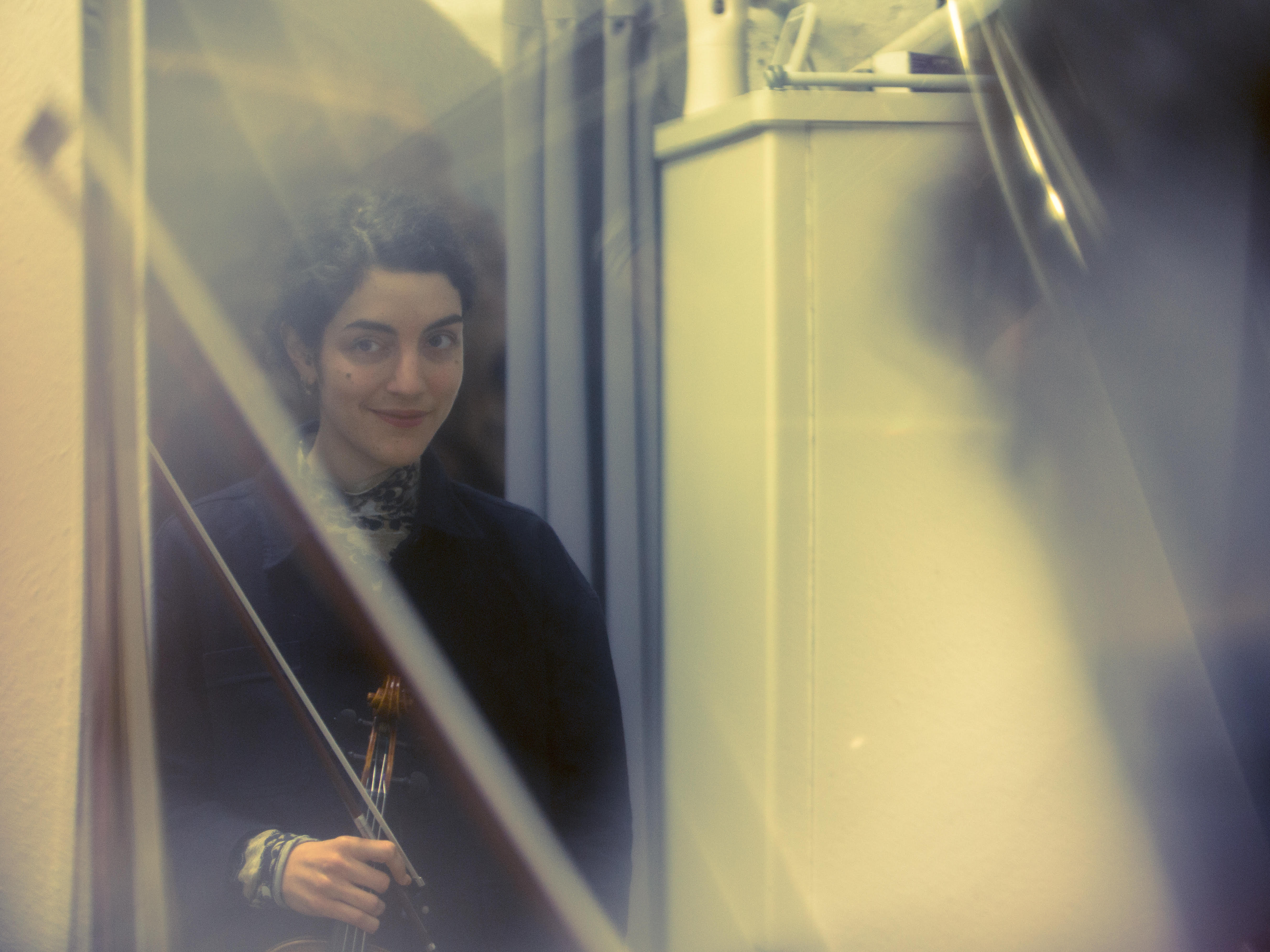
Clara Levy
13 visions For Solo Violin
Clara Levy – violin
17:45
CONCERT #5
Morton Feldman
Three Voices
Kristia Michael – voice
19:00
ARTIST TALK
With Clara de Asís, Clara Lévy, and Nirantar Yakthumba
Tao G. Vrhovec Sambolec, moderator
20:15
CONCERT #6
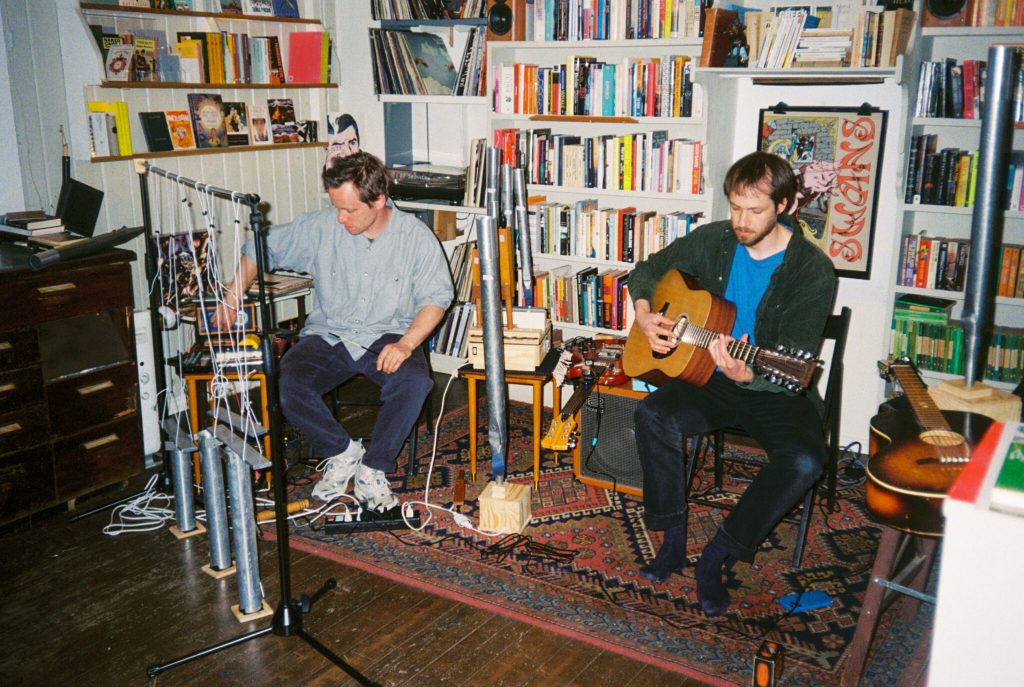
Pip: Torstein Lavik Larsen & Fredrik Rasten
Heliacal Waves commissioned by Echonance Festival, world première.
Torsten Larsen – trumpet/organ modules, Fredrik Rasten – guitars/organ, Elisabeth Smalt – viola, Seamus Cater – concertina, Reinier van Houdt, Claudio F Baroni, Lucie Nezri – organs.
Heliacal Waves is composed with support from Musikkfondene and Kulturdirektoratet
Sunday 8 February
19:00
ARTISTS TALK
With Torstein Lavik Larsen & Fredrik Rasten, Reinier van Houdt and Christina Kubisch.
Tao G. Vrhovec Sambolec, moderator
20:15
CONCERT #7
Jürg Frey
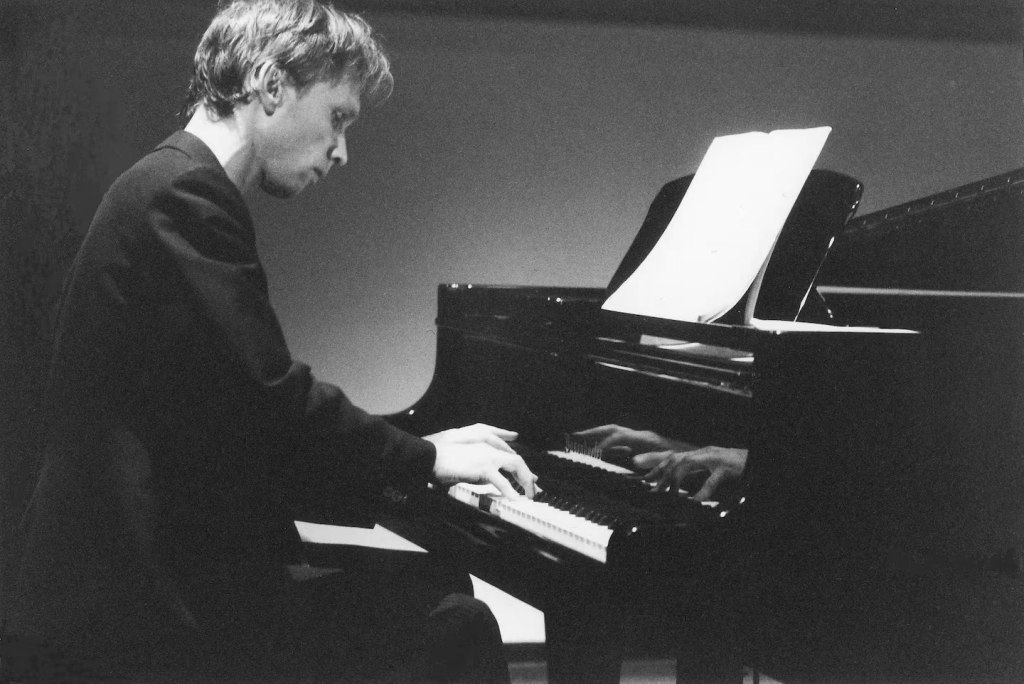
1- Composer, alone (1) for piano (2023–2024)
2- Miniature in Five Parts for organ
(2013) Dutch première.
Reinier van Houdt, piano & organ
Christina Kubisch
Stromsänger for six voices and electronics
. (2023–2024) Dutch première.
Trondheim Voices
2/ Notes on the works
She moves through space / Clara de Asís
Written for viola, organ/piano, and electronics, the piece will explore interdependent relationships between dynamics of attention, spatial trajectories, time, and the perceptual fluctuations that emerge from these interactions.
Drawing from my ongoing interests in attention, perception, and hybrid tuning systems, this work approaches these acoustic instruments through a lens often associated with electronic music; one grounded in frequency interaction, filtering, spatial diffusion, perceptual thresholds, and oscillating gradations of tone.
New composition commissioned by Echonance and Orgelpark.
Solo for Trumpet, Organ Pipes, Electronics, and Percussion / Torstein Lavik Larsen
Norwegian trumpeter and composer Torstein Lavik Larsen explores the intersection of breath, resonance, and electronic transformation. The trumpet and organ pipes form a shared field of air-driven sound, extended by electronics and punctuated by percussive textures. Rather than following a linear form, the piece unfolds as a sequence of evolving sonic states, where noise, silence, and sustained resonance are treated as equivalent musical materials.
Soliton(e) Star/
Catherine Christer Hennix
The drone piece Soliton(e) Star unfolds as a precisely tuned, continuous harmonic field where interacting frequencies create subtle beating patterns and a deeply immersive listening space, inspired by the stability of “soliton” waveforms.
Hidden Melodies/
Tom Johnson
In Hidden Melodies, Tom Johnson (1934—2024) explores the beauty of simple numerical processes. Patterns unfold gradually, revealing subtle symmetries and discreet surprises within strictly defined structures. The piece exemplifies Johnson’s minimalist clarity: music that discovers itself through logic, repetition, and attentive listening.
बगलामुखी (Bagalāmukhi)
/ Nirantar Yakthumba
This piece grows from Nirantar’s study of North Indian ragas, Arabic maqāmāt, and quarter-comma meantone. Bagalāmukhi proposes 42 new tonalities in an extended meantone system, each with melodic fragments that reveal its character and guide improvisation. The work invites performers to learn these tunings deeply and relate them to their own musical practice.
Instrument and Voice / Peter Ablinger
Ablinger transforms spoken voice into precise musical patterns, which the instrument seeks to mirror. The piece exposes the tiny details of speech—its pitches, noises, and rhythms—turning language itself into music.
13 visions
For Solo Violin/
Clara Lévy
13 Visions is a cycle of short pieces for solo violin, each shaped as a distinct sonic image. Inspired by an imagined conversation between Hildegard von Bingen and Pauline Oliveros, Lévy weaves medieval clarity with deep listening practices, creating a meditative sequence where fragile colors and quiet gestures unfold with intimate focus.
Three voices /
Morton Feldman
Three Voices (1982) layers two pre-recorded vocal lines with one live singer, creating a delicate web of repeating patterns and softly shifting harmonies. Feldman’s characteristic quietness and long durations invite close listening, as the three intertwined lines drift in and out of focus like slowly changing light.
Heliacal Waves /
Duo Pip – Torstein Lavik Larsen & Fredrik Rasten
The duo trumpeter Torstein Lavik and Larsen and guitarist Fredrik Rasten create immersive soundscapes where time seems to stretch, shimmer, and slow down.
Their music invites introspective listening, perfectly in tune with our ongoing festival exploration of music as a spatial and perceptual experience. Heliacal Waves is composed with support from Musikkfondene and Kulturdirektoratet.
Miniature in Five Parts for organ /Composer, alone (1) for piano /
Jürg Frey
Jürg Frey’s music is grounded in attention, stillness, and the experience of time as an open, shared space. His works unfold slowly, giving equal importance to sound, silence, and resonance. Rather than directing the listener, Frey creates conditions for listening in which subtle changes, fragility, and presence come to the foreground, and the surrounding space becomes an integral part of the music.
Stromsänger for six voices and electronics / Christina Kubisch
“The general theme of the composition is the idea of sounds that travel. During a tram ride from the city up to the hills on an old tram, I discovered not only stunning views of the surrounding landscape, but also a special soundscape. Wearing custom-made induction headphones, I could hear the normally hidden electromagnetic fields of the tram. These sounds were so impressive and musical to me that I immediately decided to base my piece for Trondheim Voices on this discovery.”
Christina Kubisch
Stromsänger is a collaboration between sound artist Christina Kubisch and the Norwegian vocal ensemble Trondheim Voices.
3/ Biographies
Composers
Peter Ablinger (Austria)
Ablinger first studied graphic arts and became enthused by free jazz. He completed his studies in composition with Gösta Neuwirth and Roman Haubenstock-Ramati in Graz and Vienna. Since 1982 he has lived in Berlin, where he has initiated and conducted numerous festivals and concerts. In 1988 he founded the Ensemble Zwischentöne. In 1993 he was a visiting professor at the University of Music, Graz. He has been guest conductor of ‘Klangforum Wien’, ‘United Berlin’ and the ‘Insel Musik Ensemble’. Since 1990 Peter Ablinger has worked as a freelance musician. From 2012-2017 he was Research Professor at the University of Huddersfield. In 2019 he was Guest Professor at the Royal Conservatory in The Hague and Leiden University. Since 2000 he has been engaged in various forms of non-institutional teaching and work with private students.
Clara de Asís (SP)
Spanish artist and experimental composer whose work engages with the interplay of acoustics, temporality, and the praxis of attention. De Asís explores how sound perception is shaped by specific social and material contexts, using electronics, sound synthesis, idiosyncratic combinations of found objects, and traditional instruments. Her practice spans performances, audio works, and installations, often focusing on resonance, spatial interaction, and subtle acoustic shifts over time. For Echonance, Clara will compose a new piece for organ(s), viola, traverso, and electronics. Developed at Orgelpark, the work will take the form of a modular, open score—designed for interpretive flexibility and for adaptation across performance settings and keyboard instruments.
Morton Feldman
was an American composer and a central figure of the mid-century “New York School” avant-garde, a collective focused on cultivating radical indeterminacy and interdisciplinary practices. A close collaborator of John Cage, Feldman studied with Stefan Wolpe and was later appointed the Edgard Varèse Professor of Composition at SUNY Buffalo. In his creative output, he rigorously investigated the organization of sound, questioned the structural boundaries of notation through the invention of graphic scores, and explored the implications of abstract expressionist painting on temporal musical form.
In his late work, Feldman expanded his interests in scale and memory through an orientation focused on extreme duration. In particular, he investigated how micro-variations in sonic constraints—silence, soft dynamics, and recurring patterns—are articulated within a composition. This practice of extreme extension served as a unique technology to stimulate trans-individual introspection, challenge preconceived ideas of musical time, and reconfigure the relational boundaries between sound and silence.
Catherine Christer Hennix
(1948–2024) was a Swedish composer, mathematician, and artist whose work merges minimalism, just intonation, and mystical thought. A close associate of La Monte Young and Marian Zazeela, she developed a rigorous, long-duration approach to sound and harmonic perception.
Tom Johnson
(1939–2024) was an American composer. He is famous for minimalist music. This style uses simple patterns. He was the first writer to use the term “minimalism” for music. He blended math with music. His work is logical and often includes dry humor.Johnson was born in Greeley, Colorado. He got music degrees from Yale University. He also studied with the composer Morton Feldman.He lived in New York for 15 years. During this time, he wrote for The Village Voice. He told readers about new, exciting types of music. He moved to Paris in 1983 and lived there for the rest of his life.Johnson used math formulas to write notes. This is like using a pattern to build a song. He wrote pieces based on counting, patterns, and logic.
Christina Kubish (DE)
A pioneer of sound art, Christina has spent decades developing a singular practice rooted in sound, space, and perception. While her work spans concerts, performances, video, and visual art, she is best known for her sound installations and electroacoustic compositions, where she poetically reveals hidden layers of our sonic environment. Christina has forged a unique artistic practice by adapting technologies such as ultraviolet light, solar energy, and electromagnetic induction, merging audio and visual elements into multisensory experiences that invite participants to become active listeners. Since 2003, her ongoing series Electrical Walks has taken place worldwide, transforming urban spaces into audible landscapes of electromagnetic fields.
Christina will create a new work for one of Echonance’s most treasured adventurous companions, the ONCEIM Orchestra, together with electronics. This collaboration promises to be a highlight of Echonance 2026 and a milestone for the festival, furthering our commitment to bold and radical artistic propositions.
Christina Kubisch has a unique way of working with musicians, and it all begins with listening. In each city she visits, she uses her special coil headphones to collect electromagnetic sounds—buzzes, hums, and signals that normally go unheard. She often describes this process as a kind of mapping: each city has its own invisible soundscape, shaped by its specific infrastructures and electrical systems. She then creates a file with these recordings and shares it with the musicians, inviting them to respond freely to what they hear. These first reactions form the foundation of the musical material that follows. From there, she begins to “orchestrate” this sound material, shaping durations, textures, and densities. The result is music with very open harmonies and flexible forms. The harmonic language shifts between microtonal and tonal elements, and the structure unfolds in a series of interconnected movements, like a chain of evolving moments. Notation is developed gradually, reflecting both what happens in rehearsals and the creative input of the musicians.
Clara Levy
(1991, France) studied the violin in Paris and Brussels where she completed her Master degree “cum laude” with Naaman Sluchin (2015). In the meantime she also participated to Masterclasses with Radu Blidar, Jean Lenert, Ami Flammer, Yuzuko Horigome, Claude Richard, Stéphane Tran-Ngoc and Quartet Prazak, Ebène and Bela for chamber music.
Devoted to contemporary music, she had the opportunity to play with Ensemble Linea, Ensemble Itinéraire, Ensemble Oxalys and worked with composers such as Kaija Saariaho, Howard Moody, Pascale Jakubowski and Karim Haddad.
Following her research on the relation between musical notation, sound and movement she is now part of the Advanced Master in Contemporary Music and a member of GAME (Ghent Advanced Master Ensemble), a joint initiative of Royal Conservatory Ghent and Ictus ensemble.
Duo Pip
Led by the trumpeter Torstein Lavik Larsen (NO) and guitarist Fredrik Rasten (NO/DE), Pip creates enduring sonic landscapes through a patient, precise, and attentive approach to sound. Justly intonated harmonies, airy textures, and slow melodies form an organic music in which listeners can both surrender and actively explore its multilayered sonic facets. Since forming in 2006, the duo has developed a distinctive voice spanning improvisation and collective composition.Continuing their experiments with just intonation, microtonality, extended techniques, and invitations to introspective listening, Fredrik and Torstein will compose a new work for organs, guitar, trumpet, and electronics (and perhaps more!), specially developed at Orgelpark.
Nirantar Yakthumba
is a musician and composer from Nepal, based in The Hague, the Netherlands. He is the artistic director of the Kali Ensemble, a collective of musicians and composers in The Hague focused on cultivating long-term collaborations and diverse collective practices. He obtained a Bachelor of Music in Music Composition from the Royal Conservatory of The Hague, with distinction, and a Master of Music from the Institute of Sonology, also with distinction.
In his current work, Nirantar continues to explore his interests in sound, instrument making, and collective practice from an information-oriented perspective. In particular, he investigates how variations in information constraints—structure, redundancy, noise, (in)determinacy—are articulated with and within a work, and how such a practice of variation can be a technology to stimulate transindividual introspection, challenge preconceived ideas, and make room for difference in relational configurations.
Reinier van Houdt
Reinier van Houdt started working with tape-recorders, radio’s, objects and various string-instruments at a young age. He studied piano at the Liszt-Akademie in Budapest & the Royal Conservatory in The Hague. He developed a fascination for matters that escape notation: sound, timing, space, physicality, memory, noise, environment – points beyond composition, interpretation and improvisation.
 ECHONANCE FESTIVAL