ECHONANCE #5 Orgelpark Amsterdam February 5, 6 & 7 2026 – 7 programs over 3 days, and artist talks on Sunday.
This section contains 1/ the full program of the festival, 2/ notes on the works, and 3/ biographies of the participants
1/ Program
Friday 5 February
20:00
Festival Opening
Festival opening and presentation of the new CD released in collaboration between Echonance and Unsounds Records.
This year, we are releasing ‘Heliacal Waves’ (2025-26) by Pip Ensemble, commissioned by the festival.
20:15
CONCERT #1
ORCHESTRA ONCEIM
Patricia Bosshard
1- Reflets for orchestra (2018). Premiere in The Netherlands
Christina Kubisch
2- Un jour dont on ne sait plus la couleur for orchestra (2025-26) – World Premiere (WP). Commissioned by Echonance and the ONCEIM.
Saturday 7 February
15:00
CONCERT #2
Adrian Demoč – Portrait-concert
1- Chords (2026) – ensemble
2- A Luca Marenzio I (2021) for viola y organ
3- Ma fin est mon commencement (2019) solo piano
4- Harmonium (2024-25) for viola + bass Clarinet and organ.
5- Gebrechlichkeit (2023) solo accordion
6- Zamat (2023) for ensemble
Ensemble Echonance: Elisabeth Smalt – viola, Gareth Davis – bass clarinet,
Claudio Jacomucci – accordion, Reinier van Houdt – piano, and Claudio F. Baroni – organ.
16:45
CONCERT #3
Marianne Schuppe
Little luggage for viola, piano, organ, and voice-lute ( WP 2026-2027)
Reinier van Houdt, piano/organ; Elisabeth Smalt, viola; and Marianne Schuppe, voice, organ and lute.
Echonance Festival commissioned this composition with financial support from Pro Helvetia.
19:15
ARTIST TALK #1
with Patricia Bosshard, Adrian Demoč, Marianne Schuppe and Christina Kubisch. Tao G. Vrhovec Sambolec, moderator
20:15
CONCERT #4 Quartetto Maurice
Lin Korobkova
String quartet ‘Via San Giuseppe’ (2025)
Clara Levy
String Quartet (WP 2026/27)
Commissioned by Echonance and Quartetto Maurice
This program is in collaboration with the Italian festival ‘Musica in Prossimita’ Quartetto Maurice: Georgia Privitera – violin, Laura Bertolino – violin Francesco Vernero – alto, and Aline Privitera – cello.
Sunday 8 February
15:00
CONCERT #5
Pauline Oliveros
1- Primordial / Lift (1998) for ensemble
Maze ensemble – Anne La Berge – flute, Gareth Davis – bass clarinet, Wiek Hijmans – electric guitar, Dario Calderone – double bass, Reinier van Houdt – organ and Yannis Kyriakides electronics.
16:45
19:00
20:15
CONCERT #6
Biliana Voutchkova, violin.
1- Phill Niblock – Biliana (2023) If they could speak (2022) for violin and Tape
2- Peter Ablinger – An de Mond for violin, voice and electronics (2023)
3- Biliana Voutchkova – Ruins of Rules ( 2023)
ARTIST TALK #2 at 19:00 (one hour)
Clara Levy, Claudio Caldini, and Biliana Voutchkova.
Tao G. Vrhovec Sambolec, moderator
CONCERT#7
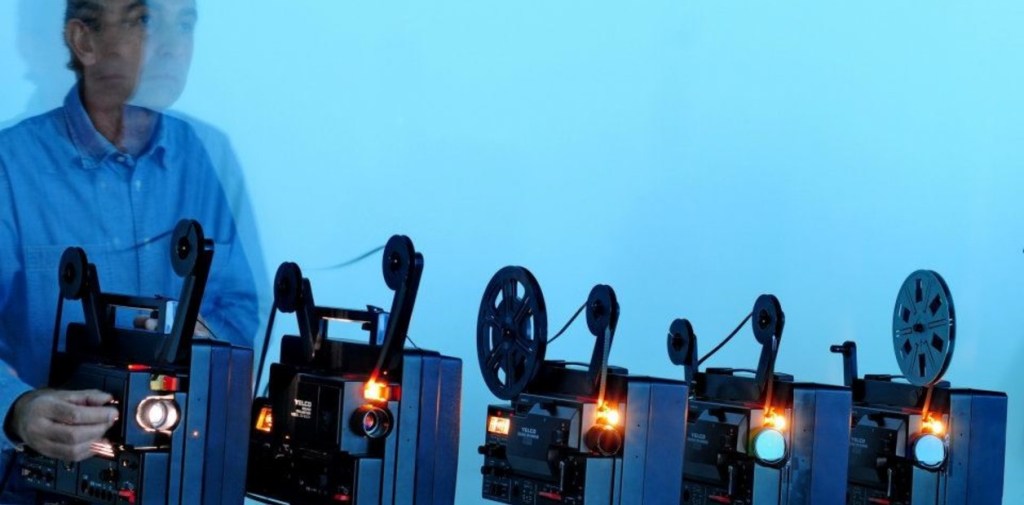
Claudio Caldini – Concert for film and music
1- Paisajes urbanos (2023) for ensemble and film in Super 8 [NL premiere]
Trio Ekhos: Giuseppe Doronzo – baritone saxophone, Kristia Michael – voice and Claudio Jacomucci – accordion, and guest organ: Claudio F Baroni
2/ Notes on the works
Un jour dont on ne sait plus la couleur for orchestra and electromagnetic sounds (2025-2026) / Christina Kubisch
During the performance, the sound spectrum changes slowly and almost imperceptibly. Some electromagnetic waves are introduced from a sampler or mixer by one or more musicians familiar with these tools. Slowly, one by one, other musicians create electromagnetic waves directly using special custom-made induction receivers. The sound sources should be based on light sources (like neons, LED and light screens etc…). Sounds are distributed by speakers through a mixer and become integrated with the acoustic sounds of the “real” instruments.
Reflets for strings orchestra /
Patricia Bossard
This composition explores the harmonic richness of bowed string instruments. Depending on the chosen playing technique, each note reveals a unique palette of timbres and possibilities. The work is grounded in a precise analysis of harmonics—ranging from a full, natural tone to
sul ponticello (near the bridge) and playing near the fingerboard. These sonic colors are redistributed among the instruments, “illuminated” across various octaves and through diverse textures. Balancing assertion and suggestion, the repetitive gestures invite the performer to engage in a degree of improvisation, choosing moment by moment between a full tone and a harmonic sound. ‘Reflets’ thus highlights the exceptional texture of a string ensemble, inviting the listener on a novel sonic journey.
Adrian Democ
“His music sits comfortably on the edges of several aesthetics, most notably that of American experimentalists, in contrast with European minimalism and spectralism. The influence of Feldman is keenly felt, but there is also a specifically European sensibility, sometimes present
as nostalgia or lament. In addition to the occasional use of folk or Gothic & Renaissance instruments (the Slovak fujara or dulcimer, cornetto muto, gittern, plectrum lute, gothic harp etc.) and alternate tunings, this tendency to laments that use historical materials connects him
to György Ligeti. However, Demoč tends to isolate a few parameters and work with them exclusively, leading to a non-rhetorical quietude and contemplation entirely unlike Ligeti (Kvarteto, Septett, A Luca Marenzio, Ma fin est mon commencement). There is often a sense of
the remnants of an earlier music being heard; only its core, its general feeling – a poetics heard from a distance. At other times, emotional intensity and expression play a crucial role, (Struny: steny, zhluky, sny, Apogeum, Katharsis). He has had a very fruitful relationship with the Slovak violinist and violist Milan Paľa, whose passionate style suits the bare feeling of these pieces particularly well.”
_Ian Mikyska
Little luggage/
Marianne Schuppe
The text ‘Little Luggage’ is the ground from which our music will unfold in a shared process of translation and transmission.
Translation begins with reading. We began our first encounter with reading the text together aloud, each one at their own pace and tone. The mere sound of our overlaying and alternating voices was already music. From there I invited Elisabeth and Reinier to read the poem through
their instruments and their own musical practices. Different aspects of the text can guide its passage into music. I have proposed some
guidelines. In the end, each of us will make our own decisions about how we transfer the text into our playing.
My interest is not in dissolving the differences between our readings, but in allowing the space between them to remain audible. That space – between the poem, my language, and theirs – is where our music with little luggage takes place.
_ Marianne Schuppe
Via San Giuseppe
/ lin korobkova
Via San Giuseppe (2025, ca. 25 min) is a string quartet in which the space of performance itself serves as a kind of ‘preparation’ of the relations between musicians. They are physically separated from one another, so the only means of synchronisation is listening. Live
amplification is used to capture the space’s acoustic response to the performance, which is then reused to establish a digital double of the quartet, further deceiving the players as to whether what they respond to is played live or recorded.
Ultimately, Via San Giuseppe is a work dedicated to the fragility of the sense of togetherness and how architecture is capable of altering that sentiment.
Lost City Vent Field / Clara Lévy
The string quartet Lost City Vent Field is inspired by the development of ocean floor mapping, for which the main measuring tool is the echo sounder (more commonly known as Sonar). Mirroring the musical scoring process, sound information becomes a graphic chart… and a
potential score. While around 70% of the ocean floor remains unknown to humans, the maps available are in constant evolution as the sonar technology keeps being upgraded. Similarly, the present composition has the potential to grow between each performance.
Lost City Vent Field takes its name from a clustering of towering hydrocarbonate vents, located on the Atlantis massif between 750m and 900m beneath the Atlantic Ocean. The piece is dedicated to the memory of Marie Tharp, who created the first ocean floor map and
discovered the Mid-Atlantic Ridge, which later led to the elaboration of the theory of tectonic plates.
Primordial / Lift (1998)/ Pauline Oliveros
Primordial / Lift (1998) takes root in a Low Frequency Oscillator (LFO)—an electronic tone generator that produces frequencies below the threshold of hearing. The LFO alludes to the Schumann resonances, naturally occurring extremely low-frequency electromagnetic
resonances generated by global lightning activity in the cavity between the Earth’s surface and the ionosphere. Around this slowly evolving drone, which rises almost imperceptibly in pitch as the piece unfolds, the musicians create an organic mass of sound that continuously changes shape. The resulting sonic landscape invites an expanded mode of listening, dissolving the boundary between individual sounds and a larger, slowly shifting field. Rather than illustrating a natural phenomenon, the work evokes a sense of attunement to processes that exist on a planetary scale, becoming a poetic meditation on our relationship with the Earth’s ever-present, though normally inaudible, vibrations.
Chromotherapy (film performance) /
Claudio Caldini,
The materiality of Super 8 film is exposed to the eye in a tactile manner. The magnetic track distributes sound throughout the actual performance space. The projectors form an additive colour synthesis system, governed by sensitivity and chance.
For this presentation at Echonance, Caldini collaborates with Ekhos, a trio whose live presence brings an additional musical dimension to the work. Film, sound, and performance unfold in relation to one another.
3/ Biographies
Composers
Christina Kubisch
Born in Bremen 1948, belongs to the first generation of sound artists. Kubisch’s practice ranges from performances and concerts to works with video and visual art, but she is best known for her sound installations and electro-acoustic compositions.
Kubisch created her personal artistic strategies by developing and transforming technologies such as ultraviolet light, solar energy or electromagnetic induction. In her installations, she merges audio and visual arts to create multi-sensory experiences for the participants, who are invited to become active as listeners and performers. Since 2003, she has realised the ongoing series “Electrical Walks” worldwide, sound walks in urban spaces, where electromagnetic fields become amplified and audible by custom-made headphones.
Christina Kubisch has been a professor of audiovisual arts in Berlin, Paris, Saarbrücken and Oxford. She is a member of the Akademie der Künste, Berlin. She received numerous grants and awards such as the Giga-Hertz Award 2021 for her life achievement and the German Music Authors’ Award for Electronic Music 2025. Christina Kubisch lives and works in Berlin. Website
Patricia Bossard
Patricia is a member of and collaborates with various ensembles for which she composes, including ONCEIM (Paris), Grand Eustache, the LGBS quartet (Geneva), GGRIL (Quebec), among others.
She regularly writes music for theatre, including for Dorian Rossel’s Cie STT, Valérie Poirier’s Cie Agénor and the A.C. Moser company. Patricia has been artist-in-residence at the Steim Institute (Amsterdam), 102 (Grenoble), Pantographe (Moûtiers) and Hors-Normes (Le Lieu).
Patricia has performed at numerous festivals, including Sonic Circuits Festival (Washington DC), Echo Festival (France), Crack (Paris), Météo (Mulhouse), Densités (France), Sacrum Profanum
Festival (Poland) and the Venice Biennale (Italy).
Her works have been performed at the Berlin Philharmonic (Maertzmusik festival), Festival Archipel (Geneva), CMC (La Chaux-de-Fonds), St-Merri (Paris), LUFF (Lausanne), Eglise St-
François (Lausanne), Théâtre le Reflet (Vevey), Festival Akouphène-Cave12 (Geneva), Centquatre (Paris). Patricia has performed or composed music published on labels such as Potlatch, Everest records, Megadisc-classics, Another timber, akt-produkt, insubordinations, Thödol, Confront, Shii. Website
Adrián Demoč
(1985, Slovakia) Studied composition with Martin Smolka, Frantisek Emmert, Doina Rotaru, and Osvaldas Balakauskas in Brno, Bucharest and Vilnius. His compositions are commissioned and performed by musicians and ensembles such as Klangforum Wien, Apartment House (UK), Tallinn Chamber Orchestra (EST), ensemble Ricercata (SK), Françoise Rivalland & ensemble S:i.c (FR), Milan Paľa (SK), Manuel Zurria (IT), Miroslav Beinhauer (CZ), Prague Quiet Music Collective (CZ), Plural ensemble (ES), Opera Diversa (CZ), Ostravska banda, Czech Philharmonic, Slovak Radio Philharmonic, Ostrava New Orchestra etc. in festivals and venues in Austria, Canada, Croatia, Czech Republic, Estonia, France, Germany, Lithuania, Romania, Slovakia, Spain, Switzerland, UK and USA. His pieces are released on labels such as Another Timbre, elsewhere, Pavlík records, Discreet editions or Hevhetia. Website
Marianne Schuppe is a singer, author and composer of vocal music. As a singer, she is particularly known for her recordings of Morton Feldman and Giacinto Scelsi. She has also recorded two albums of her own works: slowsongs (2015) and nosongs (2018), described as “a radical repositioning of all the traditional ingredients of songs”. Or, as she puts it herself: “My interest in the voice draws me towards the space between music and language. A realm where the essence of words merges with the fluidity of sound.”
Iin korobkova (b. 2001, they/them) is a composer, philosopher, and text-manufacturer who works with themes such as personal and collective memory, performativity, power structures, identity, rituals, and affects. In 2024, lin completed the Konzertexamen programme (third cycle) at HMDK Stuttgart, where they also worked as a lecturer in composition. They are a recipient of multiple awards and scholarships and were honoured in 2023 by the Ernst von Siemens Music Foundation with the “Forum junger Komponistinnen” distinction.
Among their most recent projects are a portrait concert in Pinerolo as part of Musica in Prossimità 2025, an evening they curated at the Bavarian Academy of Fine Arts, and the hour-long project implanted memories for voice and self-playing arciorgano, presented at the ECLAT Festival in Stuttgart in 2026. Website
Clara Lévy is a French violinist, improviser and composer, whose career is mainly focused on what is commonly called « new music »
For the past few years, she has been developing solo projects, questioning in turn the conditions of listening and the dramaturgy of the concert (Outre-Nuit), or the sometimes blurred edges between interpretation andcomposition (13 Visions). Her music is mainly inspired by the overlapping of different timescales, geological events, evolutive processes and listening agency as an active part of a musical work. Besides her own projects, she is part of several European ensembles such as ONCEIM (Paris), Hanatsu Miroir (Strasbourg). She also has close collaborations with various musicians such as Alexis Degrenier, Stéphane Clor, Victor Guaita Igual, Clara de Asis, Biliana Voutchkova, Eva-Maria Houben.
Pauline Oliveros (1932–2016) was an American composer, accordionist, improviser, and a pioneering figure in experimental and electronic music. Throughout her career, she explored listening as both an artistic practice and a way of engaging with the world, culminating in her influential concept of Deep Listening. Her works invite performers and audiences alike to experience sound as a shared, spatial, and embodied phenomenon. Blending technology, improvisation, and acoustic resonance, Oliveros’s music continues to inspire new ways of hearing and reimagining our relationship to sound, space, and one another.
Claudio Caldini (Buenos Aires in 1952) experimental filmmaker. Electronic music composer. From 1970 to date, he has made Super 8 films, videos and expanded cinema performances. In 1971 he began his studies at the Experimental Center of the National Institute of Cinematography (Buenos Aires) and attended seminars with Werner Nekes (1980) and Werner Schroeter (1983) at the Goethe-Institut Buenos Aires. Caldini worked in lighting design and operation for theater and rock concerts. Curator of Film and Video at the Museum of Modern Art of Buenos Aires (1998 – 2004) Member of the Jury of the International Short Film Festival Oberhausen, Germany (2003). Artist in Residence at the Glenfiddich Distillery, Dufftown, Scotland (2005). Visiting Artist at LIFT (Liaison of Independent Filmmakers of Toronto, 2015).
First Prize of the Primera Semana de Cine Experimental de Madrid (1991) for his film El devenir
de las piedras. Grand Prize of the III Franco-Latin American Festival of Video Art for his video
Heliografía (1994). Leonardo Award of the National Museum of Fine Arts (1997). Fellowship of
the Antorchas Foundation (1998). Prize to the trajectory 2018, National Fund of the Arts
(Argentina).
Exhibitions: Telluride International Experimental Film Festival; Xperimenta 09 Biennial, Center
of Contemporary Culture of Barcelona; International Short Film Festival, Oberhausen; Starting
from Scratch Festival, Amsterdam; Eksperimentanli Film U Tuskancu, Zagreb; Experimental Film
Week of Madrid; Scratch Projection, Paris; Live Cinema, Sao Paulo; S8 Mostra de Cinema
Periférico, La Coruña; MUSAC, León; International Film Festival of Valdivia, Chile; Alucine Latin
Film Fest, Toronto; BAMPFA, Berkeley; RedCat, CalArts, School of CinematicArts, University of
Southern California, Los Angeles; Filmmuseum, Vienna; L’Age d’Or Festival, Brussels; Pesaro
Film Festival, Italy. International Film Festival of Mar del Plata; Cinemateca Argentina; Goethe
Biliana Voutchkova is a dynamic, thoroughly engaged interdisciplinary artist, violinist, composer-performer, improviser, and curator with highly individual, unconventional artistic language. Through the prism of listening, she draws on her early classical training and years of development as a contemporary artist-performer to explore states of spontaneity and intuitive resonance across her multifaceted activities. Her work spans the widest possible range of sound, vision, and movement, including concert performances of improvisation, contemporary composition, and original site-specific work; exhibitions; long-durational/multidisciplinary performances; audiovisual works; and installation formats, with a focus on the interconnection between the inner world and sound space.
Ensembles, musicians & a theater company
Orchestre de Nouvelles Créations, Expérimentations et Improvisations Musicales ONCEIM
Onceim is an orchestra made up of thirty-five high-level musicians with a variety of musical backgrounds: improvised music, jazz, free jazz, classical and contemporary and experimental music. When he created Onceim in 2011, Frédéric Blondy sought to take the exploration of sound creation to a dimension of contemporary research. With Onceim, it’s always about creating, innovating, breaking free from the limits that instruments and classical musical writing sometimes impose. Thus, in the individual and singular precision of each musician, all are at the service of the whole to produce a result never known in advance and necessarily collective.
Ensemble Echonance
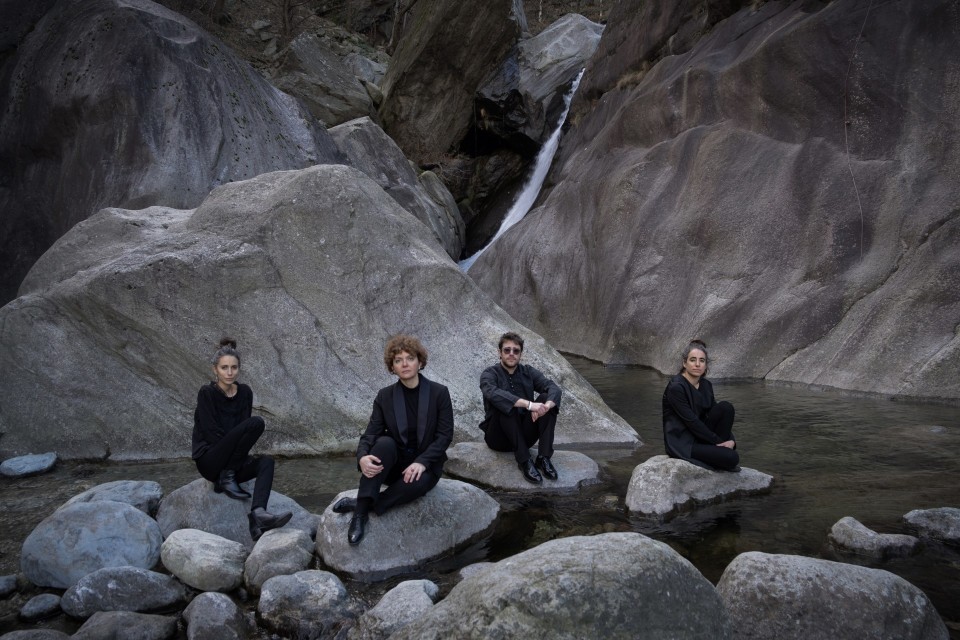
Reinier van Houdt – Elisabeth Smalt – Claudio Jacomucci – Claudio F. Baroni
Maurice Quartet / Quartetto Maurice is an Italian string quartet that has specialised in contemporary music and the development of new sonic languages since its founding in 2002. The ensemble combines a meticulous approach to classical repertoire with an intensive exploration of twentieth- and twenty-first-century music, in which electronics play a central role as a fully fledged “fifth member” of the quartet. It has worked with leading composers and performers including Helmut Lachenmann, Márta and György Kurtág, Philippe Manoury, Beat Furrer, Chaya Czernowin, Clara Iannotta and Christina Kubisch. Quartetto Maurice has performed at major
festivals in Europe, North America and South America, and has received awards including the
Franco Abbiati Prize (2015) and the Kranichsteiner Stipendium Prize at the Darmstädter
Ferienkurse (2016). Alongside its concert activities, the ensemble actively supports new commissions, education, and the promotion of contemporary music through its own foundation, Metamorfosi Notturne, and the Musica in Prossimità festival.
Maze Ensemble is a Netherlands-based ensemble dedicated to the performance of contemporary and experimental music. Bringing together musicians with a shared interest in adventurous repertoire and collaborative artistic practices, the ensemble works closely with living composers and regularly premieres new works. Maze Ensemble combines technical precision with an open and exploratory approach to performance, presenting music that
challenges conventional listening and expands the possibilities of acoustic and electronic sound.
Trio Ekhos
Claudio Jacomucci (accordion, quarter-tone and prepared accordion, overtone singing) Kristia
Michael (voice, overtone singing) Giuseppe Doronzo (baritone saxophone, ney-anban, hulusi,
longari). Ekhos brings together three composer-performers and improvisers whose backgrounds span contemporary music, experimental jazz, electroacoustic music, and traditional and ancient
musical practices. Their works — emerging from collective writing, improvisational processes, and creative collaborations with composers and artists — are sonic imprints and reflections of places: the
resonances of their past, ecological sounds, echoing poems, the chant of memory, the memory
of chant.
Ecological listening offers a way to re-establish a conscious and profound relationship with the
environment, approaching sound as an essential vehicle for knowledge and meaning.